Display Table of Contents
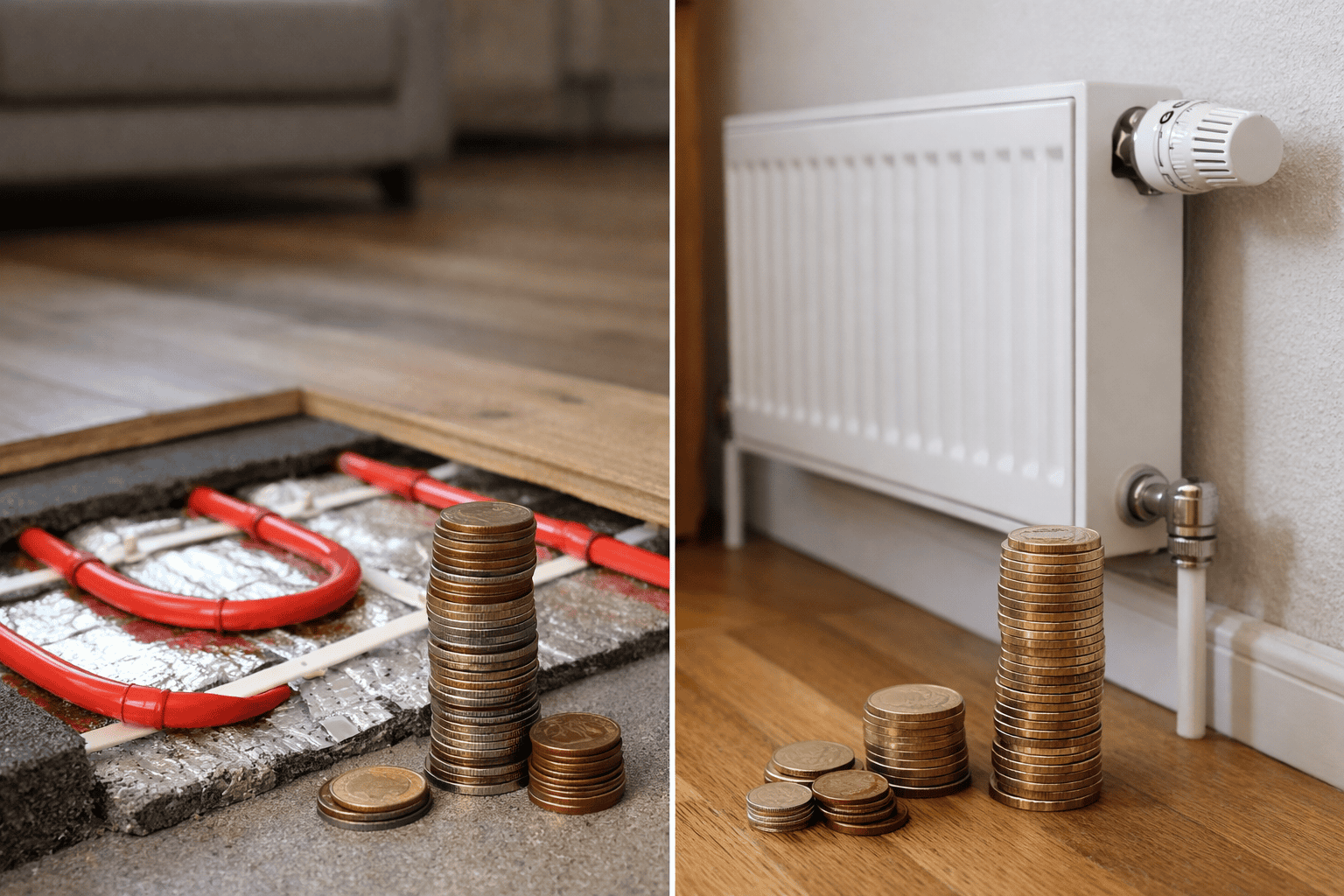
Underfloor heating often costs less to run than radiators because it works at lower water temperatures, usually 35–45°C instead of 60–80°C for radiator systems. Exact savings depend on fuel type, insulation levels, floor covering and fitting, and whether the system is electric or wet (water-based). This guide compares running costs for both heating methods, explains the factors that affect efficiency, and shows where each system performs best.
Key takeaways
- Underfloor heating runs at a flow temperature of 35 to 45 °C, compared with 55 to 75 °C for radiators.
- These lower flow temperatures can improve heat pump efficiency to three or four units per unit of electricity.
- A 10 °C drop in flow temperature can reduce annual heating bills by 15 to 20%.
- Poor insulation reduces underfloor heating savings because stored slab heat escapes before rooms warm up.
- Wet underfloor heating, paired with a well-sized heat pump, typically cuts annual heating costs by 20 to 40%.
- Zoning controls and schedules matched to actual occupancy can save 10 to 25%, regardless of system type.
- Set radiator thermostatic valves no higher than 3, roughly 20 °C, to limit unnecessary heat output.
How underfloor heating and radiators use energy differently
| Factor | Underfloor heating | Radiators |
|---|---|---|
| Typical flow temperature | 35–45 °C | 55–75 °C |
| Heat delivery method | Large floor area spreads heat evenly | Smaller emitters need hotter water |
| Heat pump effect | Higher COP at lower temperatures | COP can fall below two at 65 °C |
| Condensing boiler efficiency | More likely to stay in condensing range | Often runs above ideal return temperature |
Check the flow temperature your boiler or heat pump supplies. That single figure often decides which system costs less to run. Radiators typically need water heated to 55–75 °C. Underfloor heating spreads warmth across a much larger surface area, so it can reach the same air temperature with water at just 35–45 °C.
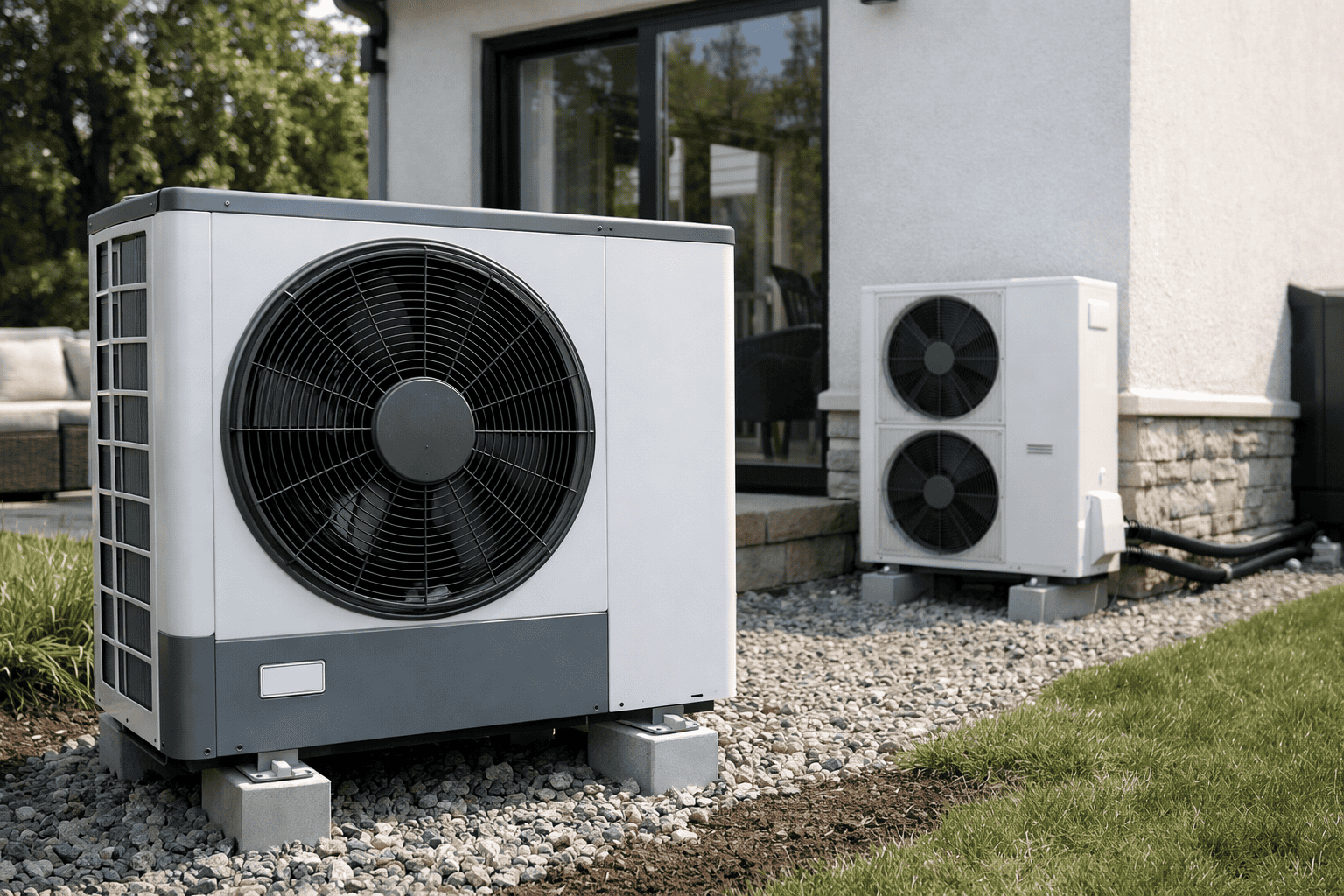
Lower flow temperatures make the heat source work less hard each hour. Heat pumps benefit most because their coefficient of performance (COP) rises as the required temperature falls. A heat pump delivering water at 35 °C can produce three to four units of heat per unit of electricity. At 65 °C for radiators, the COP may fall below two.
Gas boilers show a smaller but still measurable difference. Condensing boilers recover latent heat from exhaust gases only when return-water temperature stays below roughly 55 °C. Underfloor circuits meet that condition consistently, but radiator circuits often do not. Running a condensing boiler outside its condensing range cuts efficiency by around 10–12 percentage points and raises fuel consumption for the same heat output.
Which factors change running costs for each heating system
A 10 °C drop in flow temperature can cut annual heating bills by roughly 15–20%, but insulation quality, floor covering, and thermostat programming all affect the balance between underfloor heating and radiators.
Insulation has a direct effect on heat loss. In a poorly insulated home, underfloor heating loses much of its advantage because stored slab heat can leak through walls and floors before the room reaches a comfortable temperature. Upgrading loft and cavity-wall insulation improves the efficiency of both systems and helps reduce electricity bills if a heat pump is involved.
Floor covering also changes performance. Stone, tile, and polished concrete transfer heat quickly, so response times stay short. Thick carpet with heavy underlay slows heat transfer and can give radiators a cost edge in those rooms.
Thermostat zoning has just as much impact. Underfloor systems paired with per-room thermostats avoid heating unused spaces and trim consumption. Thermostatic radiator valves offer similar control, but manual adjustment is less precise than programmable zone controllers.
Underfloor heating running costs compared with radiator costs in real homes
Most published cost comparisons use laboratory-rated efficiency, not metered household data. That can inflate the savings gap between systems. Real-home performance depends on occupancy patterns, thermostat discipline, and how often doors and windows open.
Field monitoring by the Energy Saving Trust and heat pump trials shows that wet underfloor heating paired with a well-sized heat pump typically cuts annual heating energy by 20–40% compared with radiators fed by the same pump at higher flow temperatures. When a modern condensing gas boiler supplies both systems, the saving narrows to around 10–15%.
Electric underfloor heating changes the picture. UK electricity costs roughly three to four times more per kWh than gas, so electric mat systems often raise bills unless they are confined to small rooms with short run times.
Retrofit projects face another constraint. Fitting wet underfloor heating into an existing ground floor adds screed depth and installation cost, which extends the payback period. Upgrading existing radiator pipework to larger, low-temperature radiators can close much of the efficiency gap at a fraction of the spend. That makes the choice more about comfort preference and available floor build-up than running cost. Check with your local Plumber for estimates
When underfloor heating costs less to run than radiators
- Flow temperature stays below 45 °C
- The home is well insulated
- The floor finish has low thermal resistance
- A low-temperature heat source such as an air-source heat pump is used
- Rooms are controlled with zoning and programmable thermostats
- The property is poorly insulated
- Rooms have thick carpet and heavy underlay
- Electric underfloor heating would be used for large areas or long run times
- Retrofit floor build-up and screed depth make wet UFH expensive to install
- Larger low-temperature radiators can narrow the efficiency gap at lower upgrade cost
Underfloor heating cuts running costs when flow temperature stays below 45 °C, but it only works well with adequate insulation, a low-resistance floor finish, and a low-temperature heat source.
In a well-insulated home, a wet underfloor system pairs well with an air-source heat pump. At 35 to 40 °C flow, the pump delivers three to four units of heat per unit of electricity. Radiators raise flow demand above 55 °C, which drags efficiency down sharply.
Where no heat pump is fitted, an efficient condensing boiler still benefits from lower flow temperatures. Condensing boilers recover latent heat from flue gases most effectively when return water drops below 54 °C. Underfloor circuits meet that condition almost continuously.
Stone, ceramic tile, and polished concrete conduct heat quickly at lower water temperatures. Thick carpet with heavy underlay insulates the pipes from above and forces higher flow temperatures. If carpet is essential, keep the combined tog rating below 1.5.
Set room thermostats 1 to 2 °C lower than with radiators. The full floor plane radiates warmth evenly, so it maintains comfort at a lower air temperature and trims consumption across a full heating season.
How to reduce heating bills with underfloor heating or radiators
You can cut annual heating costs by 10–25% by matching controls to actual occupancy, not just by changing the heating type.
Zone the heating so empty rooms stay off. Underfloor systems typically include zone valves by default. Radiator circuits can achieve the same result with thermostatic valves set no higher than 3 (roughly 20 °C).
Lower the flow temperature as far as comfort allows. For radiators, dropping from 70 °C to 55 °C reduces boiler cycling and gas consumption, although warm-up takes slightly longer. Underfloor loops already run at 35–45 °C, but it is worth checking that the manifold is not set higher than needed.
Programme 3–4 °C setback temperatures overnight and during work hours. Pairing this with eco-friendly heating options such as a heat pump can increase the benefit, since heat pumps perform best under steady, low-output conditions.
Track results each month through meter readings or a smart energy monitor. Saving Energy At Home provides guidance on where heat escapes and which upgrades repay their cost fastest.
Frequently Asked Questions
Is underfloor heating cheaper to run than radiators?
Usually, yes. Underfloor heating runs at lower water temperatures than radiators, typically 35–45°C compared with 60–80°C. That lower operating temperature can reduce energy consumption by around 15–25% when paired with a heat pump or condensing boiler. Actual savings depend on insulation quality, floor type, and heating habits.
How do running costs differ between electric underfloor heating and wet underfloor heating?
Electric systems use mains electricity, so they cost more per kilowatt-hour to run. Wet systems circulate heated water from a boiler or heat pump and can use cheaper fuel sources. For whole-house heating, wet underfloor heating typically costs significantly less to run. Electric systems suit smaller zones like bathrooms, where usage is limited.
What factors have the biggest effect on underfloor heating running costs compared with radiators?
Prioritise insulation quality and flow temperature above all else. In a well-insulated home, underfloor heating can run at 35–45°C instead of the 55–75°C radiators typically need, which can cut energy use significantly. Floor covering choice also matters. Tile and stone conduct heat far more efficiently than thick carpet or engineered wood with underlay.
Does underfloor heating use less energy than radiators in well-insulated homes?
Good insulation and airtightness let underfloor heating run at water temperatures of 35–45°C, compared to 55–75°C for radiators. The lower flow temperature cuts boiler or heat pump energy demand. In a well-insulated home, expect energy savings of around 15–25% over conventional radiators.
How can you reduce the running costs of underfloor heating and radiators?
Lowering flow temperatures by just 10°C can cut energy use by 6–8%. Use a programmable thermostat and zone controls with either system so only occupied rooms are heated. Wall, floor, and loft insulation reduce heat loss, helping both underfloor heating and radiators reach target temperatures faster while using less energy.