Display Table of Contents
Windows and doors can account for a significant share of heat loss in many homes, particularly when glazing, frames, or seals perform poorly. Understanding how heat escapes through these openings helps householders target the most effective improvements, from draught-proofing to upgraded glazing. This guide explains the main ways heat transfers through windows and doors and outlines the factors that increase losses, such as gaps, materials, and temperature differences.
Key takeaways
- Heat loss through windows and doors depends on glazing type, frame, and seals.
- Single glazing loses far more heat than modern double or triple glazing.
- Gaps around frames and thresholds often cause draughts and significant heat loss.
- Low-emissivity coatings and gas-filled units reduce heat transfer through glass.
- Older, poorly fitted external doors can leak heat even when the door leaf insulates well.
- Simple measures such as draught-proofing and thermal curtains can cut losses quickly.
How heat escapes through windows and doors: conduction, convection and radiation
Heat escapes through windows and doors in three main ways: conduction, convection and radiation. Each process moves heat from warmer indoor air to colder outdoor conditions, yet each behaves differently across glazing, frames, seals and gaps.
Conduction describes heat travelling through solid materials. Glass conducts heat more readily than insulated wall cavities, so older single glazing often feels cold to the touch in winter. Frames also matter. Aluminium conducts heat quickly unless a thermal break (an insulating barrier within the frame) interrupts the path. Modern double or triple glazing reduces conduction because sealed air or inert gas between panes slows heat flow. The British Standards Institution (BSI) uses U-values to express how much heat passes through a building element; lower U-values indicate better insulation.
Convection involves heat carried by moving air. Around windows and doors, convection losses often rise when draughts pass through poorly fitted frames, worn weatherstrips, letter plates or keyholes. Even without obvious gaps, cold air near glazing can sink and set up a small circulation current that chills the room. Well-fitted seals and correctly installed units limit unwanted air movement and help maintain a stable indoor temperature.
Radiation refers to heat emitted as infrared energy. Warm surfaces inside a home radiate heat towards colder surfaces, including glass. Standard clear glazing allows a portion of this radiant heat to pass outward. Low-emissivity (low-e) coatings reduce radiative loss by reflecting more heat back into the room while still admitting daylight. Curtains and blinds can also cut radiative exchange at night, although they work best when they fit closely and do not leave large gaps at the sides.
Typical heat loss percentages for windows and doors in UK homes
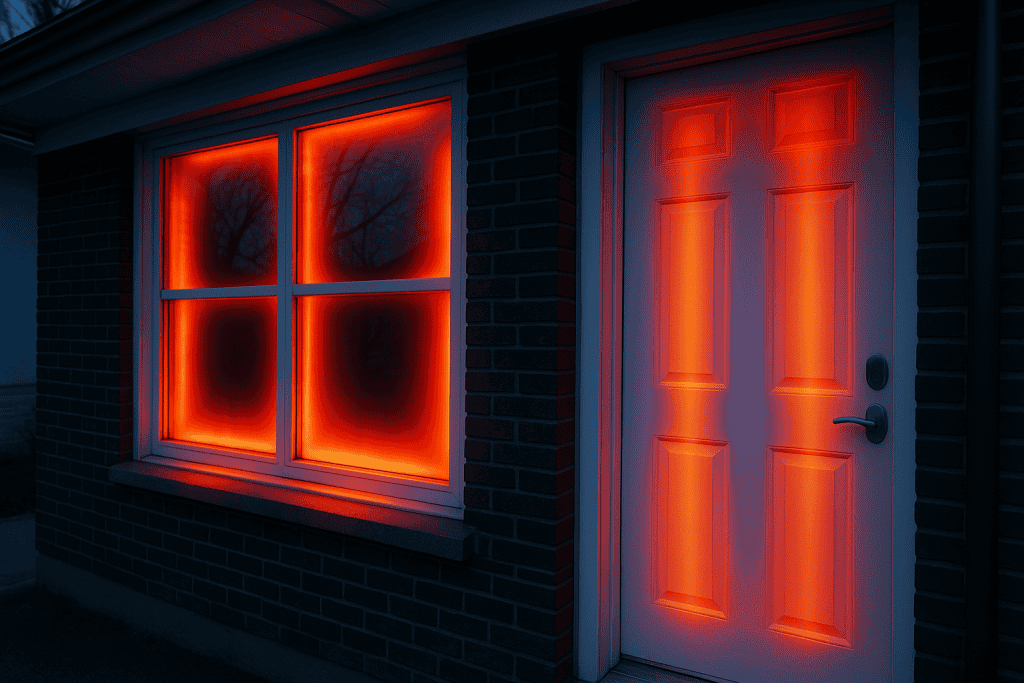
In many UK homes, windows and doors account for a noticeable share of space-heating demand because these openings usually insulate less effectively than walls, floors, and lofts. As a broad guide, older properties with single glazing and leaky frames can lose around 20–30% of heat through windows. Homes with modern double glazing and well-fitted frames often sit nearer 10–20%, although layout, exposure, and occupant behaviour can shift the figure. Curtains, blinds, and closed internal doors can also affect how quickly rooms cool down.
External doors typically contribute a smaller proportion than windows, yet poor fit can still cause significant losses. A well-sealed, insulated front or back door may represent about 5–10% of heat loss. By contrast, a warped door, worn threshold, or missing draught seals can push losses higher, especially during windy weather when air movement increases heat transfer. Letter plates and keyholes can also create small but persistent draught paths.
Garage access can also matter. An attached garage that connects to the house through an internal door, or a garage that shares a wall with a heated room, can act as a cold buffer zone. A thin, uninsulated, or poorly sealed garage door may increase heat loss from adjacent spaces, even when the garage itself is unheated. Homeowners who plan an upgrade can compare options via Buy New Garage Doors, particularly where improved sealing and insulated panels can reduce unwanted heat flow. A draught-stripped internal door between house and garage also helps.
Percentages remain indicative rather than fixed. Construction type, glazing specification, frame material, and the condition of seals all influence results. For the most reliable picture, a home energy assessment or thermal imaging survey can identify where heat escapes most and which openings warrant priority attention. Simple checks, such as feeling for draughts on a cold day, can support those findings.
Key factors that increase heat loss: glazing type, frames, gaps and installation quality
Heat loss through windows and doors rises when the glazing, frame and surrounding junctions allow heat to pass through easily or let cold air enter. Glazing type often makes the biggest difference. Single glazing has a high U-value (a measure of heat transfer, where lower values mean better insulation), so it sheds heat quickly on cold days. Double glazing reduces heat flow by trapping air or gas between panes, while triple glazing can cut it further in exposed locations. Low-emissivity (low-E) coatings also help because the coating reflects heat back into the room rather than letting it radiate out through the glass.
Frame choice matters because frames can act as a thermal bridge, which means a pathway that carries heat around insulation. Older aluminium frames without a thermal break tend to lose more heat than modern designs. uPVC and timber frames often insulate better, while well-designed aluminium systems can perform strongly when the manufacturer includes a thermal break and quality seals. Condensation around the frame edge can signal a cold bridge, although humidity and ventilation also influence condensation.
Small gaps can cause disproportionate heat loss because draughts increase convection and make rooms feel colder. Worn weatherstrips, misaligned sashes, letter plates and keyholes can all leak air. Even when glazing and frames perform well on paper, poor installation can undermine results. Installers should fit frames square, pack and fix correctly, and seal the perimeter to prevent air leakage and water ingress. In the United Kingdom, schemes such as FENSA set compliance routes for replacement windows and doors, while UK Building Regulations outline energy-efficiency expectations.
For a quick sense check, feel for draughts on a windy day, inspect seals for cracks, and look for uneven gaps around opening lights. A professional survey can confirm whether heat loss stems from the glazing specification, frame performance, air leakage, or fitting quality.
How to measure and estimate heat loss: U-values, draught testing and thermal imaging
Accurate heat-loss estimates start with three practical methods: U-values, draught testing, and thermal imaging. Each method answers a different question, so combining results gives a clearer picture of where heat escapes and which upgrades will help most.
A U-value measures how quickly heat passes through a building element, expressed in W/m²K. Lower numbers indicate better insulation. Product datasheets often quote centre-pane values for glazing, yet whole-window values include the frame and edge effects, which can raise heat loss. For doors, look for whole-door U-values that include the leaf and frame. When comparing options, check that figures follow recognised standards and match the installed configuration, since spacers, frame type, and glazing thickness can change performance.
Draught testing identifies unwanted air leakage around opening sashes, letterboxes, thresholds, and frame junctions. A simple at-home check uses a smoke pencil or incense stick on a windy day to reveal air movement at seals and gaps. For a more reliable assessment, a blower door test pressurises the home and measures air changes per hour, helping to separate fabric heat loss from ventilation losses. Guidance from DESNZ supports the use of airtightness testing when planning energy improvements.
Thermal imaging shows surface temperature patterns that suggest missing insulation, cold bridging, or air leakage. For meaningful results, schedule a survey when the indoor–outdoor temperature difference exceeds about 10°C, avoid direct sunlight, and run heating steadily beforehand. A qualified thermographer can interpret images and confirm whether cold areas relate to glazing, frames, or surrounding walls.
After identifying the main loss routes, prioritise low-disruption fixes such as seal replacement and threshold adjustment, then consider larger upgrades. In some homes, improving underfoot comfort can also reduce heating demand; New Flooring Can Help when paired with suitable underlay and good perimeter sealing.
Practical ways to reduce heat loss: upgrades, seals, curtains and ventilation control
Start with draught control, since small gaps can waste heat quickly. Fit new compression seals around opening sashes and replace worn brush strips on sliding sections. Use a letterbox brush and a tight-fitting flap, and add a keyhole cover on external doors. Where frames meet plaster, seal hairline cracks with a flexible decorator’s caulk. For larger gaps, use a low-expansion foam applied carefully to avoid distorting frames. If a door has a visible gap at the threshold, a properly adjusted drop-down seal often performs better than a basic stick-on strip.
Next, consider glazing and frame upgrades that match the property and budget. Modern double or triple glazing reduces heat transfer, while low-emissivity (low-E) coatings reflect heat back into the room. If replacement windows do not suit the building, secondary glazing can cut draughts and improve comfort without changing the external appearance. When comparing products, check certified performance and installation standards through the FENSA scheme, which covers compliance for replacement windows and doors in England and Wales.
Window coverings also help when used correctly. Close curtains at dusk to reduce radiant heat loss, and choose lined or thermal curtains that sit close to the wall. A snug fit matters: gaps at the sides and top allow warm air to circulate against cold glass. If radiators sit under windows, avoid tucking curtains behind the radiator, since the fabric can trap heat against the glass instead of letting warm air circulate into the room.
Ventilation needs control rather than elimination. Keep trickle vents open where required to manage moisture, yet avoid leaving windows on a night latch for long periods in winter. In kitchens and bathrooms, run extractor fans for a short time after use to remove humid air, which can reduce condensation on colder glazing and help seals last longer.
Frequently Asked Questions
What percentage of a home’s heat loss typically occurs through windows and doors?
In a typical home, around 20% to 30% of heat loss occurs through windows and external doors. The exact share varies with glazing type, frame condition, draughts, and insulation levels in walls and the roof. Older single glazing and poorly sealed doors usually increase this percentage.
How do U-values measure heat loss through windows and doors?
U-values measure how quickly heat passes through a window or door. They show heat loss in watts per square metre for each degree of temperature difference (W/m²K). Lower U-values mean better insulation and less heat loss. Compare products using the same standard and size, as frames, glazing, and spacers all affect the result.
How does double glazing compare with triple glazing for reducing heat loss?
Double glazing cuts heat loss by adding an insulating air or gas layer between two panes. Triple glazing adds a third pane and a second cavity, which usually reduces heat loss further. The gain often proves modest in mild climates, while costs and frame depth increase. Performance depends on low-emissivity coatings, gas fill, spacer design, and installation quality.
Which draught-proofing methods reduce heat loss around doors and window frames most effectively?
The most effective draught-proofing uses continuous seals: fit compression or brush strips to door and window frames, add a draught excluder to the door bottom, and seal gaps with flexible caulk. For letterboxes and keyholes, use a letterbox flap and keyhole cover. Replace worn seals to maintain performance.
How can thermal imaging or a home energy assessment identify heat loss through windows and doors?
Thermal imaging shows surface temperature differences, highlighting cold patches, draught paths, and poor seals around frames. A home energy assessment combines this with checks for gaps, glazing type, and insulation levels, often using a blower door test to reveal air leakage. The results pinpoint where heat escapes and which upgrades will reduce loss.