Display Table of Contents
How heat escapes from a typical UK home
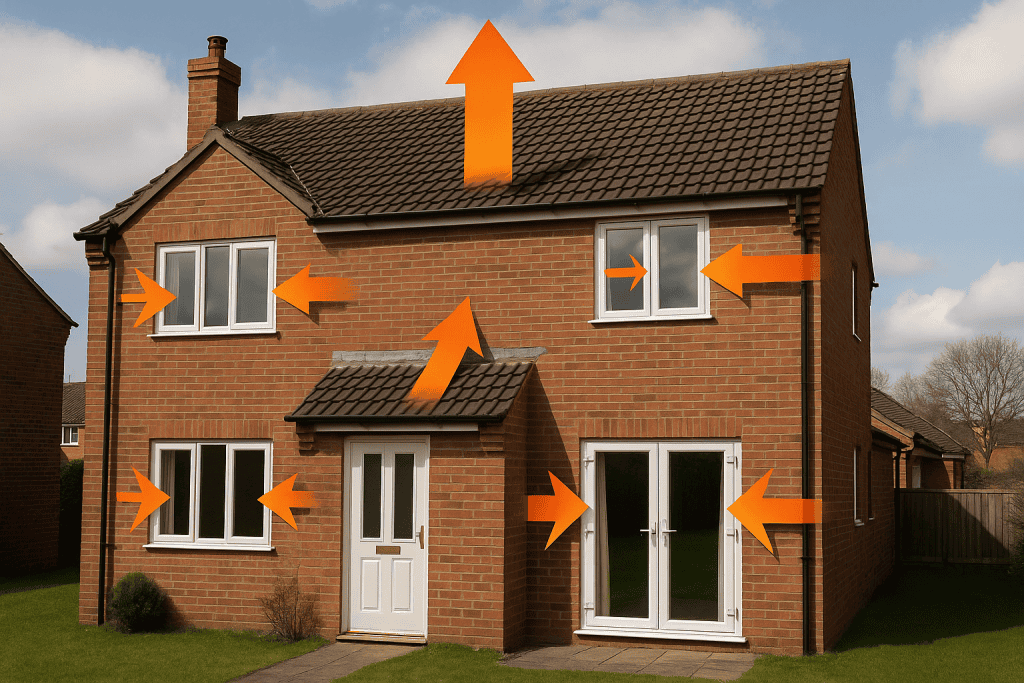
Heat escapes from most UK homes through a mix of conduction, convection and radiation. Warm air often leaks through gaps around doors, windows, loft hatches and service penetrations, while colder outside air replaces it and increases heating demand. At the same time, heat passes through poorly insulated roofs, external walls and suspended floors, especially in older properties with solid walls or thin loft insulation. Single glazing and metal frames also transfer heat quickly. Even small draughts can reduce comfort and raise bills, as Energy Saving Trust guidance highlights.
Roof and loft heat loss: insulation gaps and draught paths
Roofs and lofts often account for a large share of heat loss because warm air rises and collects at ceiling level. When loft insulation sits below the recommended depth, heat passes through the ceiling by conduction and warms the loft space instead of the rooms below. Gaps also reduce performance. Compressed mineral wool under stored items, missing sections at the eaves, and disturbed insulation around water tanks and pipework can leave cold bridges that draw heat out of the home, even when the rest of the insulation appears intact.
Draught paths can cause just as much waste. A poorly sealed loft hatch, unsealed downlights, and service penetrations for cables and ventilation ducts allow warm air to escape into the loft. That air movement increases convection and can carry moisture into colder areas, raising the risk of condensation on timbers and insulation. Effective control usually combines adequate insulation depth with careful air sealing at junctions, while keeping ventilation routes clear to protect the roof structure and maintain indoor air quality. For practical guidance on common defects and improvement options, see Property Help.
External walls: cavity issues, solid wall losses, and thermal bridges
External walls often drive steady heat loss because they present a large surface area to the weather. The exact risk depends on wall type, insulation quality, and the continuity of the thermal envelope (the layer that slows heat flow from inside to outside).
Cavity walls, common in many UK homes built from the 1920s onwards, can perform well when installers fill the cavity fully and correctly. Problems arise when insulation slumps, becomes patchy, or never reached hard-to-access areas. Wind-driven rain can also affect some wall types and exposures, which can reduce performance if moisture builds up. A competent survey should check suitability and condition before any remedial work. Guidance from the Department for Energy Security and Net Zero outlines how insulation measures should align with property construction and moisture risk.
Solid walls, typical in many homes built before 1920, lose heat faster because they lack a cavity. Even when rooms feel warm, the wall fabric can stay cold and draw heat away by conduction. This effect can increase heating demand and raise the chance of surface condensation on colder internal wall areas, especially behind furniture where air movement stays low.
Thermal bridges add another layer of loss. A thermal bridge is a local weak point where heat bypasses insulation, often at lintels, window reveals, floor edges, party wall junctions, and around steel beams. These areas can create cold spots that feel draughty even when air leakage remains limited. Careful detailing during insulation upgrades, such as continuous insulation at junctions and well-fitted boards around openings, reduces both heat loss and condensation risk.
Windows and external doors: glazing performance, seals, and frames
Windows and external doors can account for a significant share of heat loss because glass, frames, and small gaps often sit directly on the boundary between warm indoor air and cold outdoor air. Even when walls and lofts perform well, weak points around openings can raise heating demand and create cold draughts.
Glazing performance depends on how well the unit slows heat transfer. Single glazing loses heat quickly, while modern double or triple glazing uses sealed cavities to reduce conduction and convection. Low-emissivity coatings also cut radiant heat loss by reflecting heat back into the room. Condensation between panes usually indicates a failed seal, which reduces insulation value and can lead to mould around reveals.
Air leakage often causes more discomfort than glass losses. Worn weatherstrips, misaligned hinges, and shrinking timber can leave fine gaps that allow warm air to escape and cold air to enter. Pay close attention to:
- Perimeter seals around opening sashes and door leaves
- Thresholds and letter plates, which often leak in windy weather
- Trickle vents left open or damaged
- Gaps between frames and masonry, sometimes hidden by trim
Frames also matter. Aluminium frames without a thermal break can conduct heat readily, while older uPVC units may warp and compromise seals. Timber can perform well, yet poor maintenance can lead to movement and air paths. When assessing upgrades, consider the whole assembly: glazing, spacer bars, frame design, and installation quality. A well-fitted door with effective seals can reduce draughts even before full replacement becomes necessary.
Garage access can also influence comfort in adjacent rooms, especially where an integral garage shares a wall or doorway with the house. For guidance on improving fit and reducing draught paths around garage openings, see Kings Lynn Garage Doors.
Floors and underfloor voids: suspended timber floors and perimeter gaps
Suspended timber floors, common in older UK homes, can lose heat through both the floor structure and the ventilated void beneath. Cold air enters through air bricks and flows under the boards, which cools the floor surface and increases convection (heat carried away by moving air). Gaps between boards, shrinkage around skirting, and openings for pipes and cables also allow warm indoor air to leak into the void, where it dissipates quickly.
Perimeter gaps often cause the most noticeable discomfort because draughts concentrate at floor level. Even small cracks at the junction between floorboards and skirting can create a persistent cold edge to rooms, especially in windy weather. Poorly fitted or damaged floor coverings can worsen the problem by leaving unsealed edges and joints.
Targeted draught sealing and careful fitting of floor finishes can reduce air leakage while keeping sub-floor ventilation effective. When repairs or upgrades involve lifting boards, a qualified Floor Fitter can help achieve tight joints and clean edges, which supports comfort without trapping moisture in the structure.
Uncontrolled ventilation: chimneys, extractor fans, and leaky ducts
Uncontrolled ventilation removes warmed air from the home faster than the heating system can replace it. Open chimneys often act as permanent exhausts, even when no fire burns. Warm air rises up the flue and draws cold air in through gaps elsewhere, which increases draughts and heating demand. A correctly fitted chimney balloon or a dedicated draught excluder can reduce this loss while keeping the flue ventilated when required.
Extractor fans in kitchens and bathrooms also drive heat loss when units run for longer than necessary or when backdraught shutters fail. That problem often shows up as a cold flow through the grille on windy days. Timers and humidity controls help limit run time without compromising moisture removal, which reduces the risk of condensation and mould.
Leaky ductwork can waste heat in a less visible way. Flexible ducts that sag, split, or disconnect can dump warm, moist air into lofts or voids, while drawing replacement air through cracks in the building fabric. Sealing joints with appropriate tape and ensuring short, straight duct runs improves performance. Guidance on ventilation and indoor air quality sits on the UK Government Approved Documents pages, including Part F for ventilation.
Heating system losses: pipework, hot water cylinders, and radiator placement
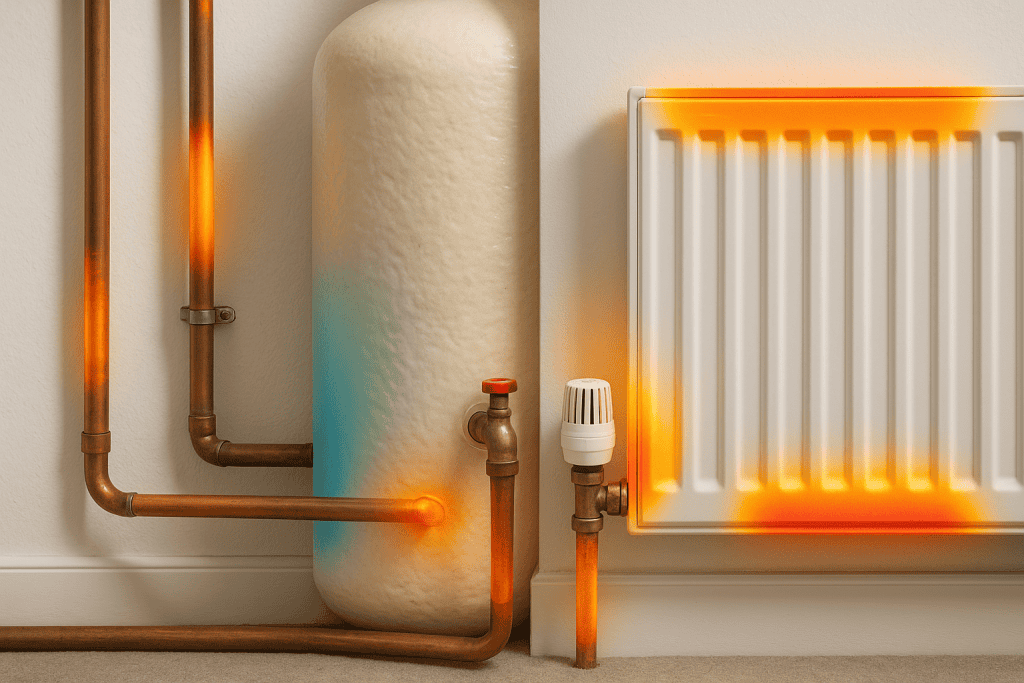
Heat can also escape through the heating system itself, even when the building fabric performs well. Uninsulated pipework in lofts, garages, and underfloor voids sheds heat into cold spaces before hot water reaches radiators or taps. That loss forces the boiler to run longer to maintain the same room temperature. Pipe insulation (often called lagging) reduces this transfer and helps hot water arrive faster.
Hot water cylinders can waste heat when the jacket fits poorly or the insulation thickness falls below modern standards. A warm airing cupboard may feel pleasant, yet the heat rarely reaches the rooms that need it. A well-fitted cylinder jacket limits standing losses and helps keep stored water hot for longer.
Radiator placement also affects comfort and demand. Radiators behind long curtains, tight furniture, or boxed-in covers struggle to circulate warm air, which can leave cold spots and encourage higher thermostat settings. Positioning radiators to support air movement, and fitting reflective foil behind units on external walls, can reduce heat absorbed by the wall and improve heat delivery to the room. Guidance from Energy Saving Trust explains practical steps to cut these system losses.
How to identify heat loss: EPCs, thermal imaging, and home surveys
Start with an Energy Performance Certificate (EPC), which gives a standard rating and lists common improvement measures. EPCs use modelled data, so treat the recommendations as a screening tool rather than a diagnosis. Check the register entry for your address on the UK Government EPC service and compare the assumptions with what you can see at home, such as insulation depth and heating controls.
Thermal imaging can then show where heat leaves the building fabric. A thermal camera highlights surface temperature differences, which can point to missing insulation, thermal bridges, or air leakage paths. Results depend on conditions, so aim for a cold, still evening with the heating on and internal doors in their usual positions. Avoid interpreting one bright patch in isolation; patterns across a wall or ceiling usually tell a clearer story.
For the most reliable picture, book a home energy survey. A qualified assessor can combine visual checks, measurements, and targeted tests to separate heat loss through materials from heat loss driven by draughts. Ask what the survey includes, how the assessor will report findings, and whether the recommendations account for moisture risk and ventilation needs.
FAQ
Do I need to stop draughts completely to reduce heat loss?
No. Homes need controlled ventilation to remove moisture and pollutants. Seal unintended gaps (around loft hatches, pipe penetrations, and ill-fitting doors) while keeping vents and extractor fans working as designed. If condensation or mould appears, increase controlled ventilation rather than reopening random leaks.
Which upgrades usually give the quickest reduction in heat loss?
The best option depends on the property type, yet many homes improve quickly with low-cost measures such as draught-proofing and insulating accessible hot water pipes. Where a loft has little insulation, topping up to an appropriate depth often helps. Use the UK Government EPC service to check typical recommendations, then confirm what applies on site.
Can I rely on an EPC to pinpoint where my home loses heat?
An EPC provides a standardised estimate, not a diagnostic survey. The assessment may use assumptions about insulation and construction where evidence is limited. Treat the EPC as a starting point, then verify key details (such as insulation depth, glazing type, and heating controls) before spending on major work.
Is thermal imaging worth paying for?
Thermal imaging can help you spot cold areas and air leakage paths, especially with a blower door test (a fan test that measures air leakage). Results depend on conditions, so book during colder weather and ask the assessor to explain what each image shows and what it does not.
Will better insulation cause damp?
Insulation does not create moisture, yet it can change how a building dries. Good detailing matters: maintain ventilation, avoid blocking air bricks where they serve a purpose, and address existing leaks. If a home has persistent damp, seek specialist advice before adding insulation to walls or floors.
How can I check whether cavity wall insulation is suitable?
Suitability depends on exposure to wind-driven rain, cavity condition, and workmanship. Ask for an inspection that checks cavity width, debris, and wall ties. Use an installer certified through CIGA or accredited under TrustMark for clearer quality assurance and complaint routes.