
Display Table of Contents
Victorian and terraced houses often lose heat through gaps created by age, movement, and original detailing. In the United Kingdom, space heating accounts for about 63% of household energy use (DESNZ, 2024), so reducing unwanted draughts can cut bills and improve comfort quickly. Common leakage points include sash windows, suspended timber floors, and poorly sealed loft hatches. The aim is to block uncontrolled air flow while keeping planned ventilation to manage condensation and indoor air quality.
Key takeaways
- Start with a draught survey: check skirting gaps, floorboards, and chimney breasts.
- Seal suspended timber floors using flexible filler, then fit draught strips under boards.
- Fit brush or rubber strips to external doors; add a letterbox brush and keyhole cover.
- Reduce sash window draughts with staff beads, parting beads, and discreet brush seals.
- Block unused fireplaces using a removable chimney balloon or fitted draught excluder.
- Maintain ventilation: keep trickle vents clear and avoid sealing air bricks.
Identify draught sources in Victorian and terraced houses: surveys, smoke tests, and thermal imaging
As of February 2026, space heating still accounts for about 55% of typical UK household energy use (UK Government: Energy Consumption in the UK). In Victorian and terraced housing, uncontrolled air leakage can raise heating demand and create cold spots, even when loft and wall insulation perform well. A structured survey helps prioritise the highest-impact fixes before sealing work begins.
Start with a room-by-room visual inspection and a simple smoke test on a windy day. Hold a smoke pencil or incense stick near skirting boards, sash windows, chimney breasts, and pipe penetrations; visible movement indicates a pressure-driven draught. For reliable results, aim for an indoor–outdoor temperature difference of at least 10°C, which improves the contrast for follow-up imaging.
Thermal imaging adds precision by showing where cold air enters and where insulation gaps sit behind lath-and-plaster. The Chartered Institution of Building Services Engineers (CIBSE) recommends thermography under stable conditions; in practice, surveys often work best after 2–3 hours of steady heating. Expect to pay roughly £150–£300 for a basic domestic thermal survey in the UK, which can prevent spending hundreds on low-value sealing. If you plan wider upgrades, align draught findings with measures such as renewable energy sources to reduce demand before sizing new systems.
Seal windows and doors without harming period features: sash gaps, letterboxes, and thresholds
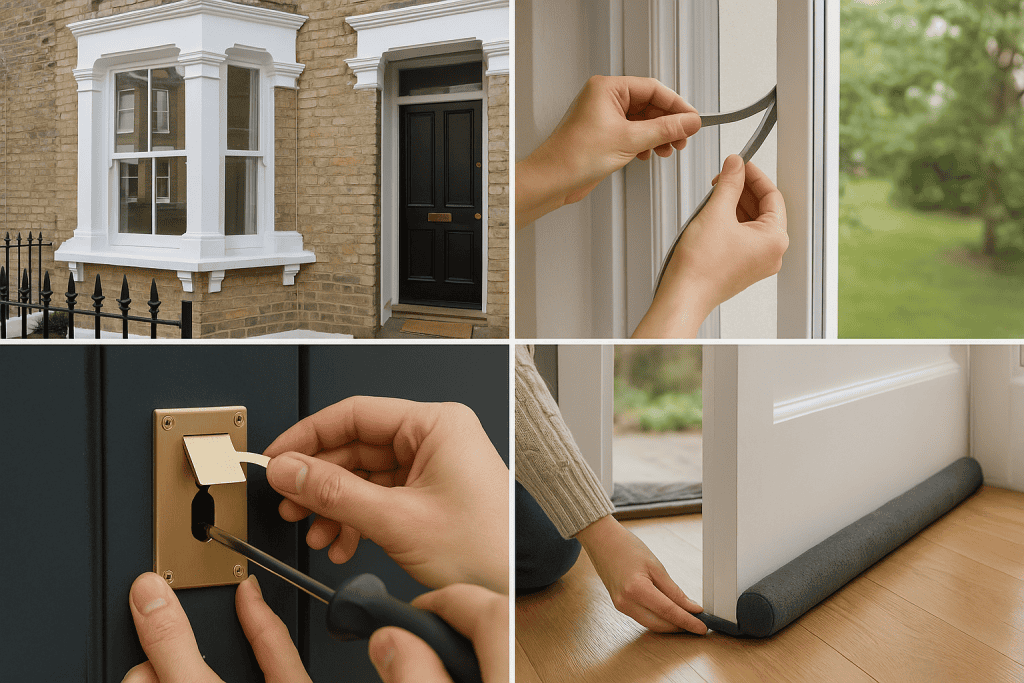
On a windy January evening, a typical Victorian terrace front room can feel warm near the radiator yet cold at ankle height. A common cause sits in plain sight: a timber sash window with a 2–4 mm gap at the meeting rail, a letterbox flap that does not close fully, and a worn threshold where daylight shows under the front door. Those three points can create a steady draught path that chills the room even when the boiler runs continuously.
Start with reversible measures that respect period joinery. For sash windows, fit brush-pile strips into the staff bead and parting bead, or use a discreet compression seal at the meeting rail. Quality brush seals typically compress by 1–3 mm, which suits uneven timber without forcing the sash. Avoid silicone sealant on painted timber; it can trap moisture and complicate future repairs.
Next, treat the letterbox as a direct hole through the building envelope. Replace a loose flap with a sprung or brush-lined unit, or add an internal letterbox cover that closes after post arrives. A standard letterbox opening measures roughly 250–300 mm wide, so even small gaps around the flap can move a noticeable volume of cold air during gusts.
At the threshold, aim for a continuous seal without raising the door or planing historic timber. A low-profile threshold plate paired with an adjustable door sweep can close a 5–10 mm under-door gap while keeping the original door in place. Where floors slope, choose a sweep with a flexible blade rather than a rigid strip to maintain contact along the full width.
- Check operation: open and close sashes and doors after each change; friction indicates over-compression.
- Keep ventilation intentional: retain background vents where present to manage moisture and indoor air quality.
- Prioritise heat loss: sealing these openings reduces draught discomfort and can cut heating demand, which remains about 55% of typical UK household energy use (UK Government: Energy Consumption in the UK).
Applied across a whole terrace, these targeted fixes improve comfort without stripping original features, and they complement larger efficiency upgrades such as insulation and low-carbon heat sources.
Draught-proof suspended timber floors, chimneys, and loft hatches while maintaining ventilation
Victorian and terraced houses often lose heat through hidden voids, while modern homes more often leak at service penetrations and ill-fitting doors. Option A uses targeted draught-proofing that preserves background airflow; Option B seals openings aggressively and then compensates with mechanical ventilation. Option A suits suspended timber floors, open chimneys, and loft hatches because those elements also support moisture control and indoor air quality.
| Element | Option A: controlled sealing | Option B: full closure | Practical implication |
|---|---|---|---|
| Suspended timber floors | Seal board gaps and service holes; keep underfloor air bricks clear | Seal gaps and block vents | Blocked vents raise subfloor humidity and increase timber decay risk |
| Chimneys | Fit a removable chimney balloon or vented cap when not in use | Mortar or permanently cap the flue | Permanent closure can trap moisture and salts in the flue lining |
| Loft hatches | Add compressible seals and positive latches; insulate the hatch | Seal shut without access planning | Poor access reduces maintenance and can damage insulation continuity |
The key difference is ventilation control. The UK Building Regulations Approved Document F sets minimum ventilation expectations, and older homes often rely on passive pathways. Keep air bricks unobstructed, use draught strips that compress to 2–5 mm, and fit a loft hatch seal that closes evenly on all four sides. If sealing cuts natural airflow, plan replacement ventilation before extending measures such as insulation or renewable energy sources.
Choose materials, costs, and compliance: conservation areas, Building Regulations, and expected energy savings
In many Victorian and terraced houses, small gaps across multiple junctions can keep air permeability high, increasing heat loss and making rooms harder to control. The UK Government Approved Document L sets expectations for energy efficiency when work counts as a “material alteration”, while conservation areas often restrict changes to visible fabric such as external doors and windows.
Choose materials that match the substrate and movement. Use compressible brush or rubber seals for timber sashes, closed-cell foam for stable door stops, and intumescent, fire-rated sealants where services penetrate party walls. Budget £80–£200 per external door for seals and thresholds, and £150–£350 per sash window for discreet draught-proofing, depending on access and joinery repairs.
Implement work by confirming conservation constraints with the local authority, then prioritising reversible fixes: fit perimeter seals, add a chimney balloon only when the fireplace stays unused, and seal service gaps with suitable mastic. Results typically include fewer cold draughts and lower heating demand; the Energy Saving Trust estimates draught-proofing can save around £40 per year in a typical UK home, with higher savings where leakage is severe.
Frequently Asked Questions
Which parts of Victorian and terraced houses cause the most draughts, and how can you identify them?
Victorian and terraced houses usually leak air around sash windows, external doors, suspended timber floors, chimneys, and loft hatches. Check on a windy day: feel for cold air, watch curtains move, and use a lit incense stick to spot smoke drift. Typical gaps of 2–5 mm around frames can create noticeable draughts.
What draught-proofing methods work best for sash windows without damaging original features?
Use reversible measures: fit brush-pile or spring bronze strips in the staff and parting beads, and add a discreet meeting-rail seal. Install a removable secondary glazing panel; it can cut heat loss through windows by about 50–60% (Historic England). Repair cords and adjust weights so sashes close tightly. Avoid silicone sealants and replacing original timber.
How can you draught-proof suspended timber floors in terraced houses while maintaining ventilation?
Seal gaps between floorboards and skirting with flexible filler or draught strips, then fit an airtight membrane over the joists before relaying boards. Insulate between joists with mineral wool (100–150 mm) supported by netting, leaving a 25–50 mm ventilated void above the ground. Keep existing air bricks clear and add vent sleeves if insulation blocks airflow.
What is the best way to seal gaps around external doors and letterboxes in older properties?
Fit a compressible perimeter seal (EPDM rubber or brush) to the door frame and add an adjustable threshold seal; aim for a continuous seal with a 2–4 mm compression when closed. For letterboxes, install an internal draught excluder and an external flap with a brush seal. Replace worn hinges to stop door drop.
Which draught-proofing measures should you avoid in Victorian homes to prevent condensation and damp?
Avoid sealing Victorian homes airtight. Do not block chimneys, air bricks, or underfloor vents, as these manage moisture. Avoid non-breathable draught strips, thick plastic films, and vinyl paints on solid walls; these can trap vapour and raise condensation risk. Do not seal sash windows shut; use brush seals that keep background ventilation.