Display Table of Contents
Home EV charging can cut running costs, but tariffs, equipment and charging habits determine the final price per mile. As of 2026, many UK off-peak electricity deals price overnight units at roughly 7–12p/kWh, compared with typical day rates near 25–35p/kWh, making timed charging a major saving. A 60kWh top-up can cost about £4–£7 off-peak versus £15–£21 at peak rates. This guide reviews the cheapest, practical options.
Key takeaways
- Home charging usually costs less per mile than public rapid charging.
- Off-peak electricity tariffs cut charging costs when you schedule overnight charging.
- A smart charger helps automate charging windows and track energy use.
- Charging from a standard three-pin plug works, but it charges much slower.
- Solar panels can reduce grid electricity use when you charge during daylight hours.
- Checking your car’s battery size and efficiency helps estimate monthly charging costs.
Understanding home EV charging costs: electricity rates, efficiency, and real-world kWh use
As of 1 January 2026, Ofgem’s typical domestic electricity price cap set a unit rate of 24.86p per kWh for a typical direct debit customer (regional rates vary) (Ofgem). At that rate, charging a 60kWh battery from empty costs about £14.92 (60 × £0.2486), before charging losses. That single figure explains why electricity tariffs and charging efficiency drive most “cheap charging” outcomes at home.
Real-world charging rarely equals the battery’s labelled capacity because energy is lost as heat in the cable, onboard charger, and battery conditioning. The U.S. Department of Energy cites Level 2 charging efficiency of roughly 85% to 95% in typical conditions, which means a 60kWh refill can require about 63kWh to 71kWh from the meter. Using the 24.86p cap rate, that lifts the same session to roughly £15.66 to £17.65, even before considering any standing charge.
Vehicle efficiency then determines how many miles each kWh buys. If a car averages 3.5 miles per kWh, 10,000 miles of driving uses about 2,857kWh at the battery (10,000 ÷ 3.5). With 90% charging efficiency, the meter sees about 3,175kWh, which equates to roughly £789 at 24.86p per kWh. A less efficient 2.8 miles per kWh pushes battery demand to about 3,571kWh, and meter demand to about 3,968kWh, or roughly £987 at the same unit rate.
Context matters because home charging costs can fall sharply when households shift kWh into cheaper periods or self-generate electricity. A well-sized rooftop system can offset a meaningful share of annual charging demand, particularly for drivers who park at home during daylight hours; see solar power for homeowners for cost and installation considerations. The key is to measure your actual miles per kWh and your metered kWh per charge, then price each kWh against your tariff, not the battery label.
Choosing the cheapest tariff: off-peak, time-of-use, and smart meter strategies
At 23:30, a driver plugs in a 7kW home charger and schedules a 4-hour session to add roughly 28kWh. On a standard variable tariff near Ofgem’s capped typical unit rate of 24.86p/kWh (1 January 2026), that energy costs about £6.96. On an off-peak EV tariff at 7.5p/kWh, the same session costs about £2.10, saving £4.86 in one night.
That price gap explains why the cheapest home charging usually comes from time-of-use tariffs. These plans set a low overnight rate and a higher daytime rate, so the household must shift EV charging (and, where practical, appliances) into the cheap window. A smart meter typically enables half-hourly billing, which suppliers use to apply off-peak prices accurately.
Before switching, compare three numbers: the off-peak unit rate, the peak unit rate, and the daily standing charge. Even a 5p/kWh difference matters: charging 200kWh per month at off-peak saves £10 versus peak pricing. Use the supplier’s tariff facts and check eligibility rules, such as smart meter requirements and minimum off-peak hours.
- Set the car or charger to start after midnight and stop before the peak rate returns.
- Confirm the meter records half-hourly data and that billing uses those intervals.
- Review the latest cap figures and regional rates via Ofgem when benchmarking offers.
Hardware that cuts costs: smart chargers, scheduling, and load management
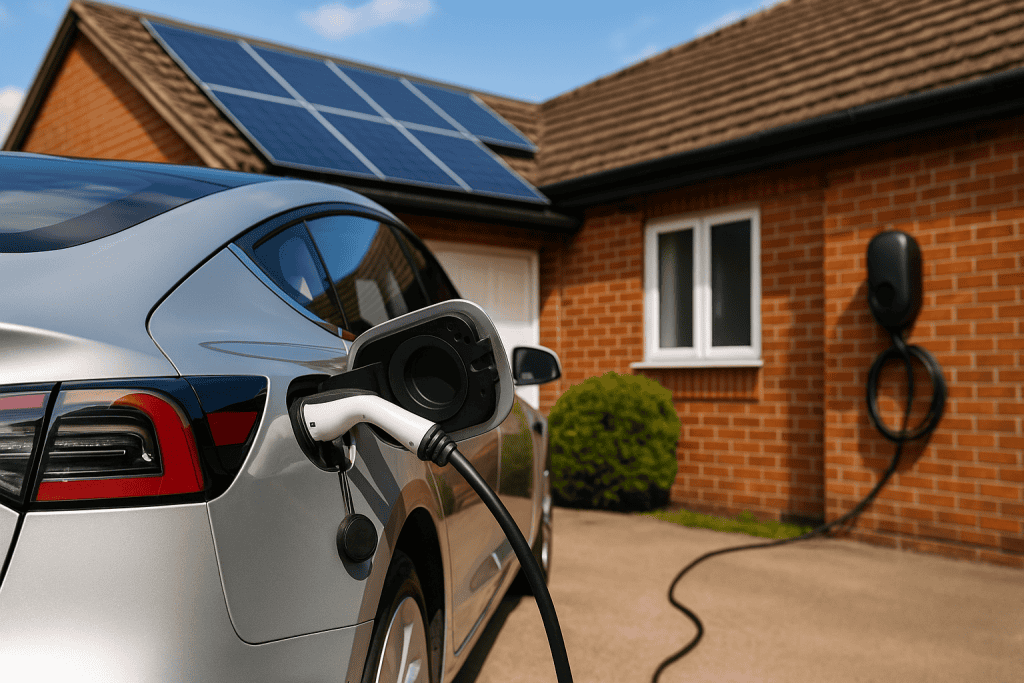
A basic “dumb” wallbox charges whenever you plug in, while a smart charger shifts charging to cheaper hours and limits peak demand. The cost difference often comes from timing and avoiding household overloads, not from the electricity itself.
Smart chargers from brands such as myenergi and Zaptec typically support scheduling, app control, and dynamic load management. With a 7kW charger, a 4-hour overnight session adds about 28kWh; if the charger reliably targets a 7.5p/kWh off-peak window instead of a 24.86p/kWh standard rate (Ofgem price cap typical unit rate, 1 January 2026), that session costs about £2.10 rather than £6.96.
Load management also reduces practical costs. A 7kW charger draws about 32A; on a common 60–100A supply, simultaneous use of an electric shower or oven can trip protection devices. Smart current limiting keeps charging running at 3–5kW instead of stopping entirely, which protects off-peak savings and reduces the need for costly electrical upgrades.
Reducing energy spend with solar, batteries, and vehicle-to-home options
Households with an EV and electric heating can push annual electricity use above 6,000kWh, making daytime charging at 24.86p/kWh (Ofgem, 1 January 2026) a material cost driver. Solar helps, but UK output peaks when many cars sit away from home, so self-consumption often stays below 50% without storage.
Pairing solar with a home battery or vehicle-to-home (V2H) shifts low-cost energy into the evening charge window. A 5kW solar array can generate roughly 4,000kWh per year across much of the UK (MCS), while a 10kWh battery can cover a typical 20–30 mile daily top-up for many EVs. V2H extends that buffer by using the car battery as a larger store when the vehicle supports bidirectional charging.
Match system size to your driving: estimate weekly EV kWh, then size solar to cover a meaningful share and storage to shift at least one day of charging. Use certified installers via the Microgeneration Certification Scheme (MCS) and confirm export and metering rules with your supplier. Correct sizing cuts peak-rate imports and increases the share of miles powered by on-site generation.
Cost comparisons and payback: plug socket vs dedicated charger, grants, and typical annual savings
In 2025, the UK Government’s EV chargepoint grant offered up to £350 off the cost of a home charger for eligible renters and flat owners. That support can cut the upfront gap between using a standard 3-pin plug and installing a dedicated unit, which typically costs about £800–£1,200 supplied and fitted in the UK (site conditions and cabling length drive variation). A 3-pin socket usually needs no installation spend, but it charges at roughly 2.3kW, compared with about 7kW for a common single-phase wallbox.
The payback hinges on how often you charge and whether a smart charger can shift energy into cheap hours. If a smart charger enables 2,000kWh per year to move from 24.86p/kWh (Ofgem price cap typical unit rate, 1 January 2026) to 7.5p/kWh off-peak, the annual saving is about £348 ((£0.2486 − £0.075) × 2,000). At that saving rate, a £900 installation pays back in roughly 2.6 years, or about 1.6 years if a £350 grant applies.
Speed also carries a cost value. A 60kWh top-up takes about 26 hours on a 3-pin plug versus about 9 hours on 7kW, which improves the odds of completing charging inside a 4–6 hour off-peak window.
Frequently Asked Questions
What is the typical cost per mile to charge an electric car at home using a standard electricity tariff?
On a standard electricity tariff, home charging typically costs about 7–10p per mile. This assumes an average EV efficiency of 3–4 miles per kWh and a unit rate of 28–30p per kWh. For a 200-mile month, that equals roughly £14–£20 in electricity.
How much can a smart EV tariff reduce home charging costs compared with a standard variable tariff?
A smart EV tariff can cut home charging costs by 50–75% versus a standard variable tariff when most charging shifts to off-peak hours. For example, charging 10,000 miles per year at 3.5 miles/kWh uses about 2,860 kWh: at 28p/kWh this costs ~£800, versus 7–10p/kWh off-peak (£200–£286).
Which home EV charger features reduce electricity use and lower charging costs?
Choose a smart charger with scheduled off-peak charging, dynamic load balancing, and solar diversion. Time-of-use scheduling can cut unit rates by 30–60% versus peak tariffs. Load balancing prevents main-fuse trips and avoids 3–7 kW demand spikes. Solar diversion can raise self-consumption from about 30% to 60–80%, reducing grid imports.
When does off-peak charging usually apply on UK EV tariffs, and how can drivers schedule charging to match it?
Off-peak windows on UK EV tariffs usually run overnight, commonly 00:00–05:00 or 23:30–05:30, with some plans offering 4–7 hours. Drivers can match this by setting a charger timer or using the car’s scheduled charging, selecting a start time inside the off-peak window and a target state of charge by departure.
How do solar panels and home battery storage change the cost of charging an EV at home?
Solar panels can cut EV charging costs by replacing grid electricity with self-generated power. A typical UK 4 kW system produces about 3,400 kWh per year, enough for roughly 10,000–12,000 EV miles at 0.28–0.34 kWh per mile. Home batteries (5–10 kWh) store daytime solar for evening charging, reducing peak-rate imports.